Eco-driving is a term used to describe a driving style and driving techniques aimed at reducing fuel consumption, producing lower emissions, and help drivers save money. You might have heard the phrase before but are wondering what eco-driving is. Below, we look at some of the factors that contribute to eco-driving and how Irish motorists can follow these practices to contribute to a greener, more sustainable future.
Eco-Driving Explained
Eco-driving as a concept is based on the idea that simple changes in driving habits can reduce fuel consumption and produce less emissions. It’s not just about driving slower, it’s about smart, smooth and efficient driving. And involves understanding how driving habits, vehicle maintenance and even planning your journeys can significantly affect both fuel efficiency and environmental pollution.
By adopting eco-driving practices, drivers can improve fuel efficiency and see a reduction in fuel costs by as much as 20%. And it can also lead to reduced stress and wear on your vehicle, which can help increase its longevity and reduce the need for costly maintenance and repairs.

5 Golden Rules of Eco Driving
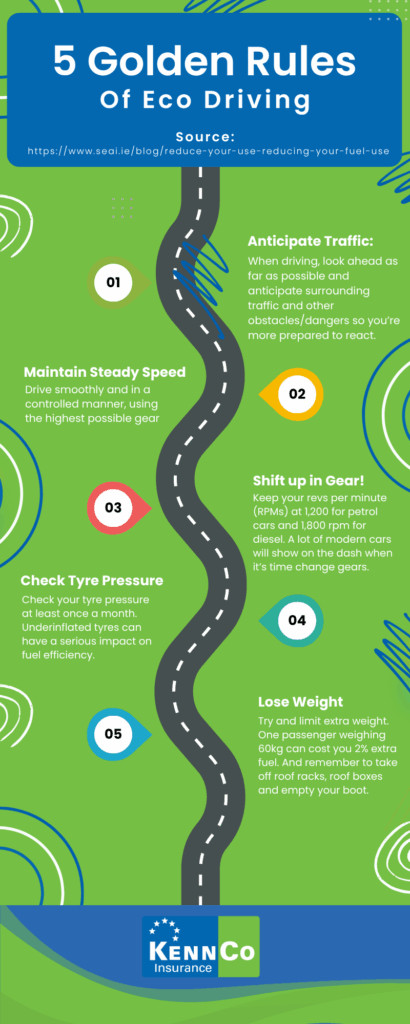
Source: https://www.seai.ie/blog/reduce-your-use-reducing-your-fuel-use
Eco Driving Tips to Reduce Fuel Consumption
Smooth Acceleration and Deceleration
Abrupt starts and stops are enemies of fuel efficiency. Gentle acceleration and using the vehicle’s momentum to slow down can markedly reduce fuel consumption. Anticipating traffic flow and adjusting your speed gradually can lead to a smoother ride and lower fuel bills.
Maintaining a Steady Speed
Speeding is a major fuel guzzler. Maintaining a steady, moderate speed within the legal limits is not only safer but also more fuel-efficient. The optimal speed for fuel efficiency varies by vehicle but generally falls within the 80-90 km/h range on open roads.
Using Higher Gears
Driving in the highest gear possible without labouring the engine reduces fuel consumption. Modern vehicles often come equipped with gear shift indicators to help drivers choose the most efficient gear.
Don’t Idle
If you expect to be stopped for more than about 30 seconds (e.g., sitting in traffic or waiting at road works), switch off the engine. Engines is modern cars use less fuel by restarting than they do idling for extended periods.
Be Smart With Your Air Conditioning
At lower speeds, consider opening windows instead of switching on the air‐conditioning, since the AC makes your engine work harder. However, if you’re travelling at higher speeds, like on a motorways, a your AC system will often consume less fuel than the drag caused by open windows.
Vehicle Maintenance
Regular Servicing
A well-maintained vehicle runs more efficiently. Regular servicing, according to the manufacturer’s recommendations, ensures that the engine operates smoothly, reducing unnecessary fuel consumption.
Tyre Pressure
Under-inflated tyres increase rolling resistance, requiring more fuel to maintain speed. Keeping tyres inflated to the correct pressure can improve fuel efficiency by up to 3%.
Drop Added Weight
Extra weight demands extra fuel. By removing unnecessary items from the car, especially heavy ones, you can reduce fuel consumption. Similarly, removing roof racks when not in use can decrease aerodynamic drag.
Don’t Overlook Your Tyres
The impact that driving on under-inflated tyres has on fuel consumption is often overlooked. When travelling, tyres meet resistance from the road surface; this is called rolling resistance. The higher the resistance, the more fuel is used to overcome it. Tyre pressure is a big contributor to rolling resistance, with studies showing an +6% increase in rolling resistance for an underinflation of 0.3 bar, and +30% for underinflations of 1 bar. Making sure your tyres are correctly inflated is a simple but effective way to cut down your car’s fuel use and emissions.
Other Factors
Route Planning
Planning your route to avoid congestion and taking the shortest or fastest route can save time and fuel. Utilising real-time traffic updates can help in avoiding traffic jams.
Carsharing and Combining Trips
Carsharing (or Carpooling) reduces the number of vehicles on the road, contributing to lower emissions and fuel savings. Combining errands into a single trip can also reduce the amount of driving you do.
Eco Driving in Ireland
The Irish government and various organisations offer resources and tips for drivers looking to adopt more fuel-efficient driving habits. By incorporating eco-driving into our daily routines, we can contribute to Ireland’s environmental goals while enjoying the financial benefits of reduced fuel consumption.
Final Thoughts
Just by making simple adjustments to driving habits, keeping your vehicle serviced and in good nick and planning journeys can significantly reduce our fuel consumption, save money and help protect the environment.
For a fast, reliable car insurance quote, talk to KennCo today on 01 409 2600 today, or get a quick quote online.
Looking to Save On Your Car Insurance?
At KennCo, our car insurance cover offers competitive rates and valuable benefits, including a replacement car as standard. Get peace of mind knowing you’re fully covered.
Get a Secure Quote Today